Get the Mammogram & Start the Conversation
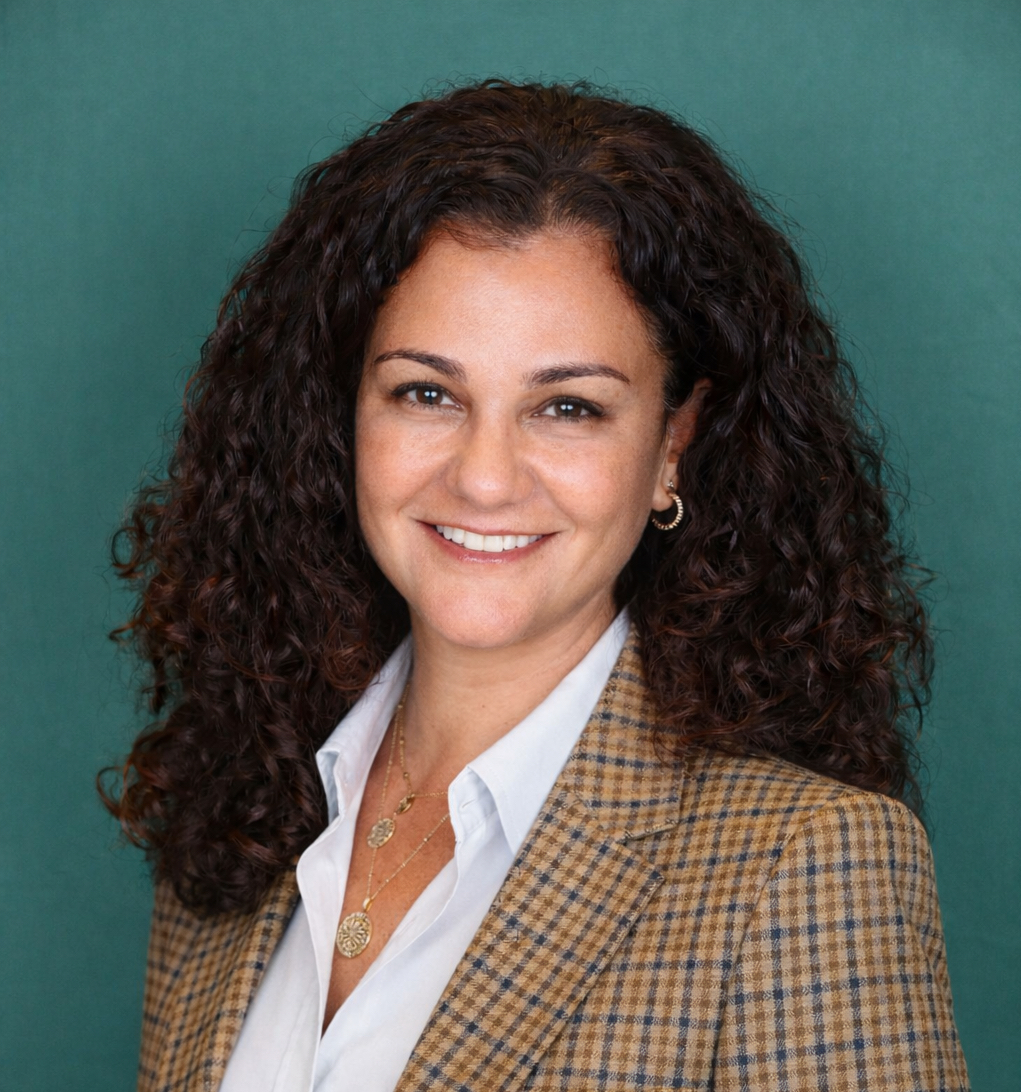
A mammogram saved my life. Twice.
I have a family history of breast cancer and I started getting yearly mammograms in my thirties. Twelve years ago, I received the news I was dreading. A “suspicious” finding. A biopsy. A 1 cm early-stage breast cancer.
Because my cancer was caught early and had not spread, not even to my local lymph nodes, I only needed a lumpectomy, radiation and tamoxifen. Because my cancer was detected early I did not need chemotherapy or to take medicine to put me into menopause as treatment. I was extremely fortunate.
Nine months ago, a mammogram saved my life yet again. This time it found precancerous changes in both breasts. This time I chose a bilateral mastectomy with reconstruction.
I am doing well. Healthy. But I have been doing well since my initial diagnosis 12 years ago. I have been present for my children. I continue to have invaluable experiences with family and friends. Additionally, I have the privilege of being a doctor taking care of women in perimenopause and menopause where breast health is central to the care I provide.
So yes, get the mammogram. But my own story taught me what I now tell every patient: the mammogram is where the real, personal conversation begins.
Get the Mammogram
A mammogram is a low-dose X-ray of the breasts and our main screening test for finding breast cancer early, often before a lump can be felt. In 2024, the recommended age to begin mammograms for women at average risk changed from 50 to 40, reflecting rising breast cancer rates among women in their 40s. And catching it early changes everything.
Early detection means a smaller tumor. Fewer treatments. Less aggressive ones. Better odds. I know those statistics as a physician. I lived them as a patient.
The recommendation to start mammograms at 40 is for women at average risk. Speak with your doctor for a personalized screening plan if you have had any of the following:
Family history of breast cancer
BRCA1/BRCA2 or other genetic variations
Chest radiation at a young age
Previous breast cancer
High risk breast lesion on a previous biopsy
I started screening in my thirties. I had a family history. I had no genetic variations or other risk factors. I hear the reasons women put it off mammograms.. It is uncomfortable. It’s scary. Life is busy. And the one I hear the most: “No one in my family has had it, so I am fine.”
But most women diagnosed with breast cancer have no family history. Family history raises your risk. Its absence doesn't erase it.
A few minutes of discomfort. Years of life. That's the trade.
Get the mammogram. Then start the conversation with your doctor. Because your mammogram report has more to tell you than simply “normal” or “abnormal.
You have the report. Now what?
Often my patients tell me that their mammogram is “normal” without the details of the report. But the details are the nuance of personalized care.
Your report carries two separate scores. One is your result. The other is your breast density. Both use the BI-RADS system and can easily be confused.
A number on your report isn’t an explanation. So here's what it means.

Now the second score: breast density. It uses letters, not numbers
Breasts are made up of fat, glands and connective tissue. The density is categorized from A to D:
A: almost entirely fatty
B: scattered areas of dense tissue
C: heterogeneously dense
D: extremely dense

Categories C and D are considered dense and roughly half of women over 40 fall into one of them. Why does that matter? Two reasons.
First, dense tissue can hide cancer. On a mammogram, dense tissue looks white. So do tumors. The denser the tissue, the more a mammogram can miss.
Second, density itself a risk factor. Women with extremely dense breasts can have up to four times the risk of women with mostly fatty breasts.
Dense breasts are common. They are normal. They are not a diagnosis. But they are a reason to have a nuanced conversation with your doctor. Because density is only one piece of the picture. To understand what it means for you, the next step is to calculate your lifetime risk of breast cancer.
What's your number? Calculating lifetime breast cancer risk
One in eight women will develop breast cancer in her lifetime. That's about 13%.
But that's an average. Your number could be lower. It could be much higher. That number is your lifetime risk, and it can be calculated.
Physicians use validated risk models to estimate your risk that consider factors including:
Family cancer history of both sides
Age of first period and menopause
Whether and when you had children
Past breast biopsies
Breast density
Your number is a percentage. And 20% is the threshold.
At a lifetime risk of 20% or higher, screening recommendation changes. Mammograms alone are no longer enough. Most guidelines call for adding an annual breast MRI. And your risk assessment may also need genetic testing.
The American College of Radiology recommends that every woman have a breast cancer risk assessment by age 25. Not at 40. Not after the first mammogram. Yet many women reach their forties and fifties without ever knowing their number.
And knowing your risk isn't meant to scare you. It's meant to tell you what to do with it.
Because if your risk is high, the next question becomes: What can you do about it?
Higher risk? Your supplemental screening options
If your lifetime risk is 20% or higher supplemental screening can find what a mammogram misses.
Not instead of your mammogram. In addition to it. Which test is right for you depends on your individual risk, breast density and access.
Breast MRI is the most sensitive screening tool we have. It's the gold-standard for women at high risk. It requires IV contrast and takes longer than a mammogram. The MRI and mammography are usually staggered so screening occurs every six months. Each scan detects cancers the other misses.
Contrast-enhanced mammography (CEM) is a mammogram with an IV contrast. It can detect cancers that a standard mammogram may miss.
Whole-breast ultrasound needs no needle and no dye. It's most often used for women with dense breasts. It is a good backup when MRI or CEM is not available, but it finds fewer cancers than MRI and is more likely to flag harmless spots that lead to extra tests.
Talk through which extra test makes sense for you with your doctor. Remember the extra test is in addition to your regular mammogram, not a replacement for it.
What does Menopausal Hormone Therapy Mean for Breast Cancer?
In 2002, one headline from the Women’s Health Initiative study scared a generation of women: hormone therapy causes breast cancer. This is not true and the real numbers tell a different story.
Combined estrogen plus progestin adds roughly 8 breast cancer cases per 10,000 women per year. Real, but small. Small does not mean meaningless especially if your baseline risk is already elevated. Which is why this conversation comes back to you: your breast cancer risk percentage, your symptoms, your health history and your preferences.
If you've had breast cancer, menopausal hormones are generally off the table. But the treatments that protect you, like tamoxifen and aromatase inhibitors, can bring hot flashes, sleep issues and vaginal dryness. I took tamoxifen. I know.
You shouldn't have to choose between protection and quality of life. There are nonhormonal medications that can effectively treat and reduce hot flashes. For vaginal symptoms nonhormonal moisturizers help and low-dose vaginal estrogen is also safe and effective.
Surviving breast cancer is the goal. Living well afterward matters too.
What to do next
Twelve years ago, a mammogram found my breast cancer when it was small and treatable.
Nine months ago, another one told me my story wasn't over.
It put the decision back in my hands and I am doing well because of it.
Today, I'm healthy. I'm here. Present for my family, my friends and my patients.
That's what screening can give you.
But the mammogram was never the whole story. It was the start of a conversation with my doctors about my risk, my screening, and my options.
You deserve that conversation, too. Ask your doctor these questions:
What's my breast density?
What's my lifetime breast cancer risk?
Given both, what's right for me?
Get the mammogram. Then keep talking.
Every woman carries her own story in her body. And sometimes the hardest part of medicine is accepting that there isn't one right answer for every woman.
Just the right answer for you.
Comments